Three Tables Find an Audience
The atmosphere model has been computing a physically based sky every frame and throwing it away. A new sky pass finally draws it: horizon gradients, a sun disc filtered through the atmosphere, and a sun elevation pin that behaves like the actual sun.
Since the atmosphere system landed, every frame with a SkyDome in it has run three compute passes implementing Hillaire’s 2020 sky model: a transmittance table, a multiple-scattering table, and a sky-view table holding the finished sky radiance for every direction you could look. Real physics, properly derived, freshly computed, sixty times a second. Then nothing read it. The sky-view table had precisely zero consumers; the most sophisticated work in the renderer was being baked and binned like a bakery with no front door.
Opening the front door
The missing piece was always small: a pass that asks, for each pixel where no geometry landed, “which direction is this, and what does the sky-view table say it looks like?” That pass now exists. A single full-screen triangle drawn at the far plane, depth-tested so your meshes always win, samples the table and writes sky radiance straight into the scene’s HDR buffer. No intermediate targets, no copy. On top of the gradient it adds the sun itself: a proper disc, sized to the real solar angular diameter, filtered through the transmittance table so it reddens and dims at the horizon exactly as the physics says it should. Moon and starfield hooks ride in the same pass for when night scenes arrive.
The pass slots in between the mesh raster and the cloud composite, which means the clouds from the last release now drift over a real sky rather than a flat backdrop, and the fog attenuates both, in the right order, by depth.
An entertaining detail for connoisseurs of dormant code: the sky shader, all 275 lines of it, had never once been validated against a GPU. Its uniform block disagreed with the CPU’s idea of its own size by sixteen bytes, the kind of mistake that survives precisely as long as nobody ever runs the thing.
The sun pin is a sun now
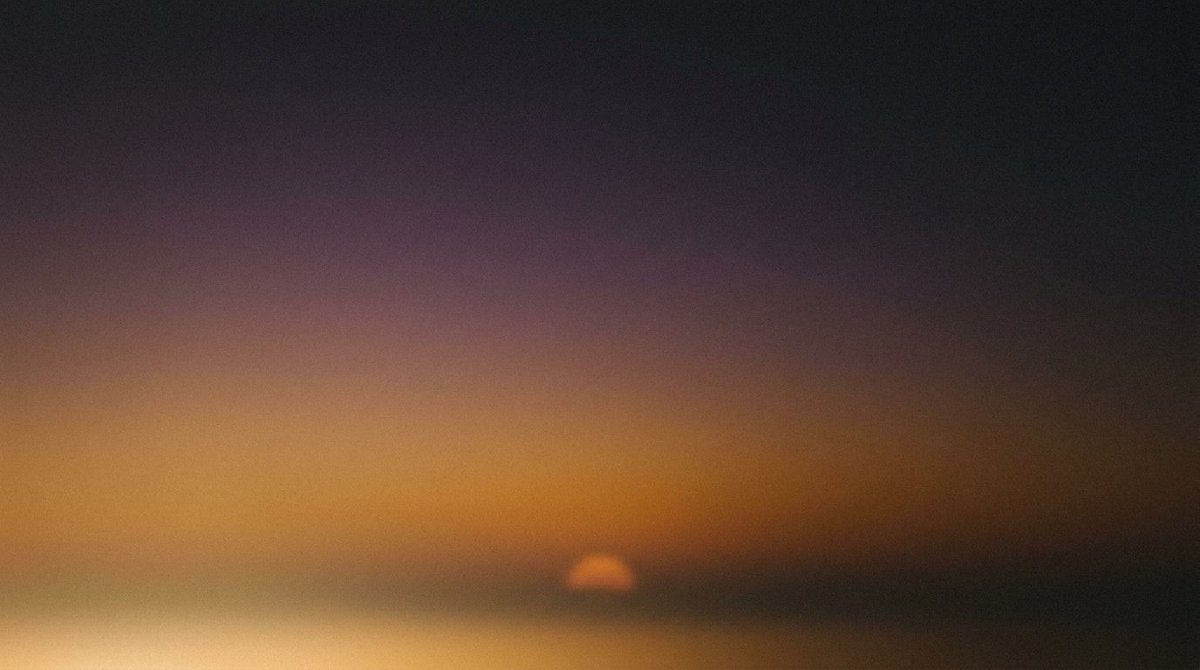
The acceptance tests are anchored to the model’s behaviour, not to our previous output. At low sun the horizon must glow distinctly brighter than the zenith; raise the sun elevation pin and that contrast must flatten toward an even blue, because that is what atmospheres do. A flat tint fails both clauses; so does any recolouring trick. And the sky_sunset showcase patch, whose SkyDome node had been sitting on the canvas connected to nothing, is now wired and renders the thing it was named after: deep blue falling to a golden band, sun limb at the horizon, geometry silhouetted in front.
What it buys you
A sky. The expensive kind, with the physics already paid for and finally delivered: sunsets that gradient correctly, a sun that moves like the sun, and a backdrop that clouds and fog compose against in physically sensible order. Three of the four environment systems now end in pixels; water remains, and it is next.